Diagnosis
Multilevel lumbar spinal stenosis in the setting of lumbosacral transitional anatomy with lumbarization of the sacral segment, producing a sixth lumbar-type vertebra designated L6. Corrected level numbering was required before surgical planning. Symptomatic neural compression was present at L3-4, L4-5, and L5-6 as defined by corrected level designations.
Procedure and level
L3-4: UBE-ULBD (Unilateral Biportal Endoscopic Unilateral Laminotomy for Bilateral Decompression). L4-5 and L5-6: Biportal Endoscopic TLIF (Biportal Endoscopic Transforaminal Lumbar Interbody Fusion) with decompression at each fusion level. L3-4 (UBE-ULBD); L4-5 and L5-6 (Biportal Endoscopic TLIF). Level designations reflect corrected numbering after identification of the lumbarized transitional vertebra as L6. Whole-spine level confirmation was performed before the operative plan was finalized.
Surgical levels and level count
- Treated levels
- 3 levels
- L3-L4 · L4-L5 · L5-L6
- Decompression
- 3 levels
- L3-L4 · L4-L5 · L5-L6
- New fusion
- 2 levels
- L4-L5 · L5-L6
Three decompressed segments, including the two fusion segments. L3-L4 is decompression alone. Preserve the source's corrected numbering for the lumbarized L6 vertebra.
One level means one treated motion segment, such as L4-L5. Decompression and fusion can overlap; their counts are not added. Counts follow the source description and have not been re-audited against private charts.
Clinical presentation
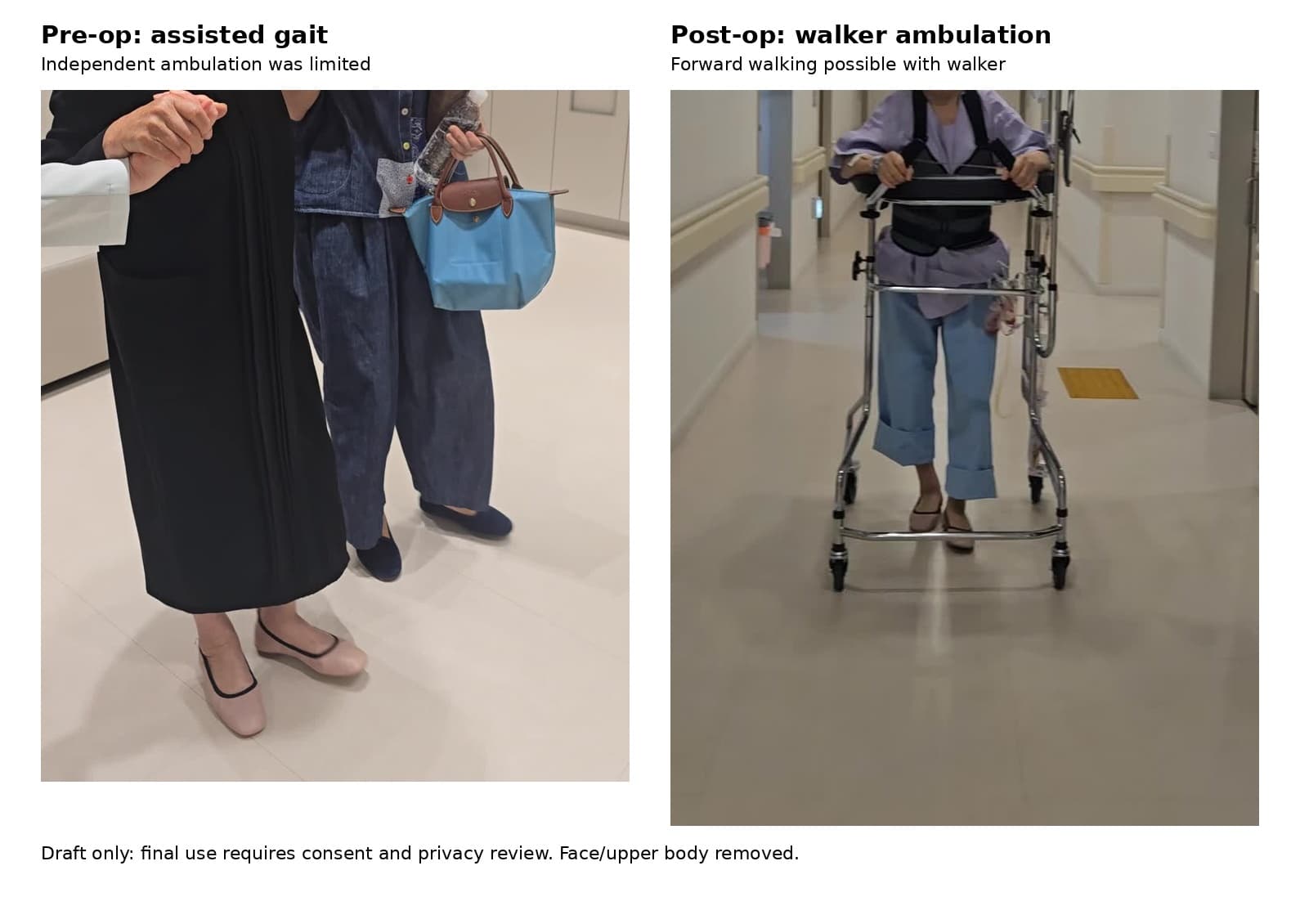
The patient presented with multilevel lumbar radicular symptoms and gait disturbance that persisted despite conservative management. Preoperative evaluation was conducted in a patient with blood transfusion limitations, which influenced the surgical planning, approach selection, and blood-loss management strategy.
Neurologic findings
Preoperative neurologic examination documented radicular symptoms and gait disturbance concordant with the multilevel stenotic pattern. Specific motor grades and sensory findings are not reported in this summary.
Prior nonoperative treatment
Symptoms persisted despite conservative management. Surgical treatment was considered because the clinical findings remained significant and were concordant with the multilevel imaging findings at the corrected levels.
Imaging and clinical concordance
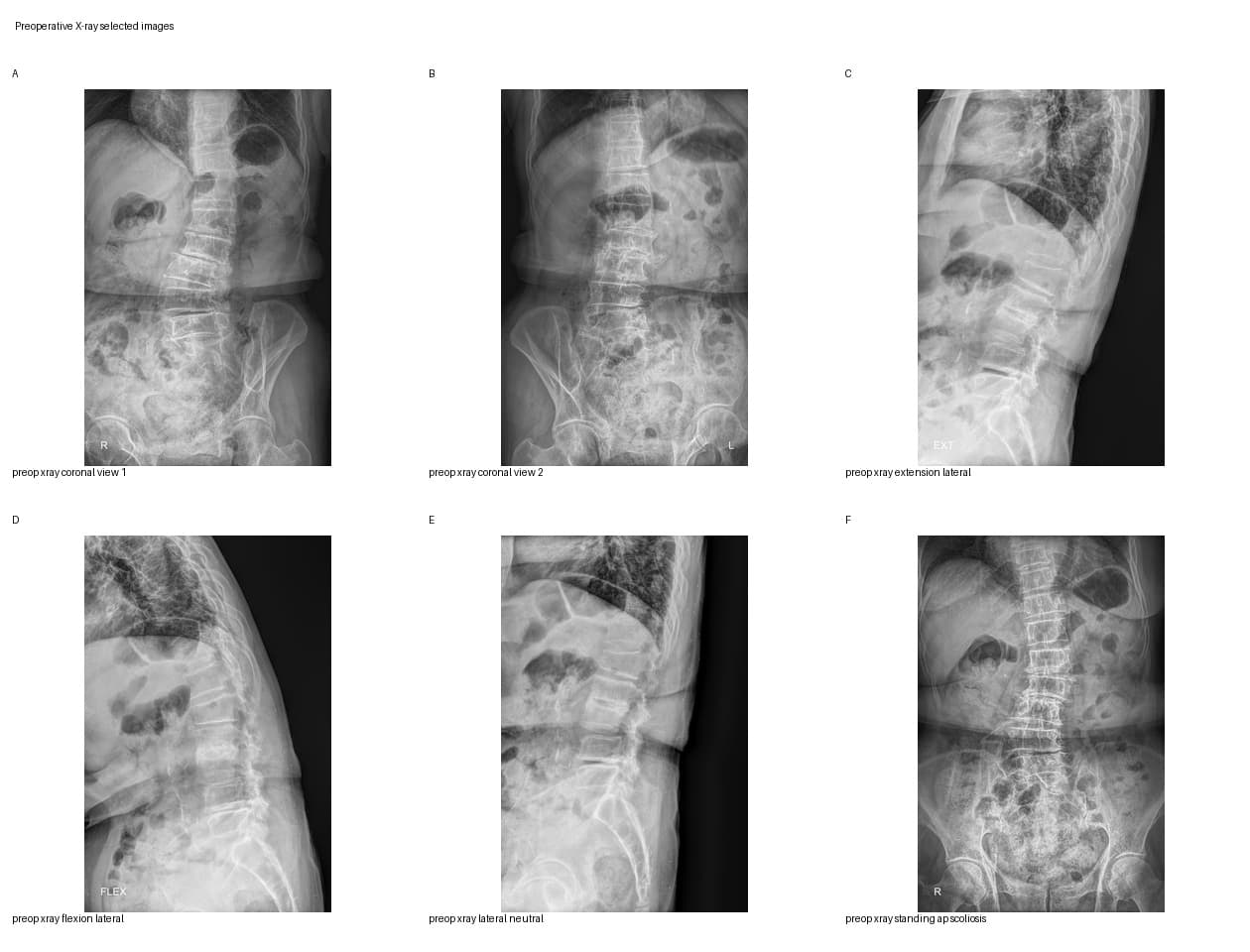
Preoperative radiographs and MRI demonstrated multilevel lumbar spinal stenosis together with a lumbosacral transitional vertebra characterized by lumbarization, producing a sixth lumbar-type segment (L6). Whole-spine level counting and segmental radiographic confirmation were performed to establish corrected level designations before surgical planning. Imaging findings were interpreted together with the patient's symptoms and neurologic examination. Neural compression at L3-4, L4-5, and L5-6 was evaluated for the appropriate procedure at each level.
Reasoning recorded for the procedure
The surgical plan was individualized to the pattern of neural compression and instability at each corrected level. L3-4 was addressed with UBE-ULBD (Unilateral Biportal Endoscopic Unilateral Laminotomy for Bilateral Decompression) because decompression alone was considered appropriate at that level. L4-5 and L5-6 were addressed with Biportal Endoscopic TLIF (Biportal Endoscopic Transforaminal Lumbar Interbody Fusion) because those levels required both decompression and interbody stabilization. In a patient with blood transfusion limitations, a fully endoscopic biportal strategy with attention to hemostasis and a low-blood-loss working environment was a relevant technical consideration integrated into preoperative planning.
Operative considerations
The operative plan comprised UBE-ULBD at L3-4 and Biportal Endoscopic TLIF at L4-5 and L5-6. Level confirmation was performed at each stage using radiographic and anatomic landmarks, with specific attention to the corrected level designations required by the lumbarized L6 transitional anatomy. At L3-4, unilateral biportal endoscopic access was used to achieve bilateral canal decompression through a unilateral laminotomy corridor. At L4-5 and L5-6, biportal endoscopic transforaminal interbody fusion was performed including decompression, disc space preparation, interbody cage placement, and posterior fixation at each level. Continuous saline irrigation and the endoscopic working environment supported hemostasis throughout, which was a relevant operative consideration in a patient with blood transfusion limitations.
Postoperative course
Not reported in the available educational summary.
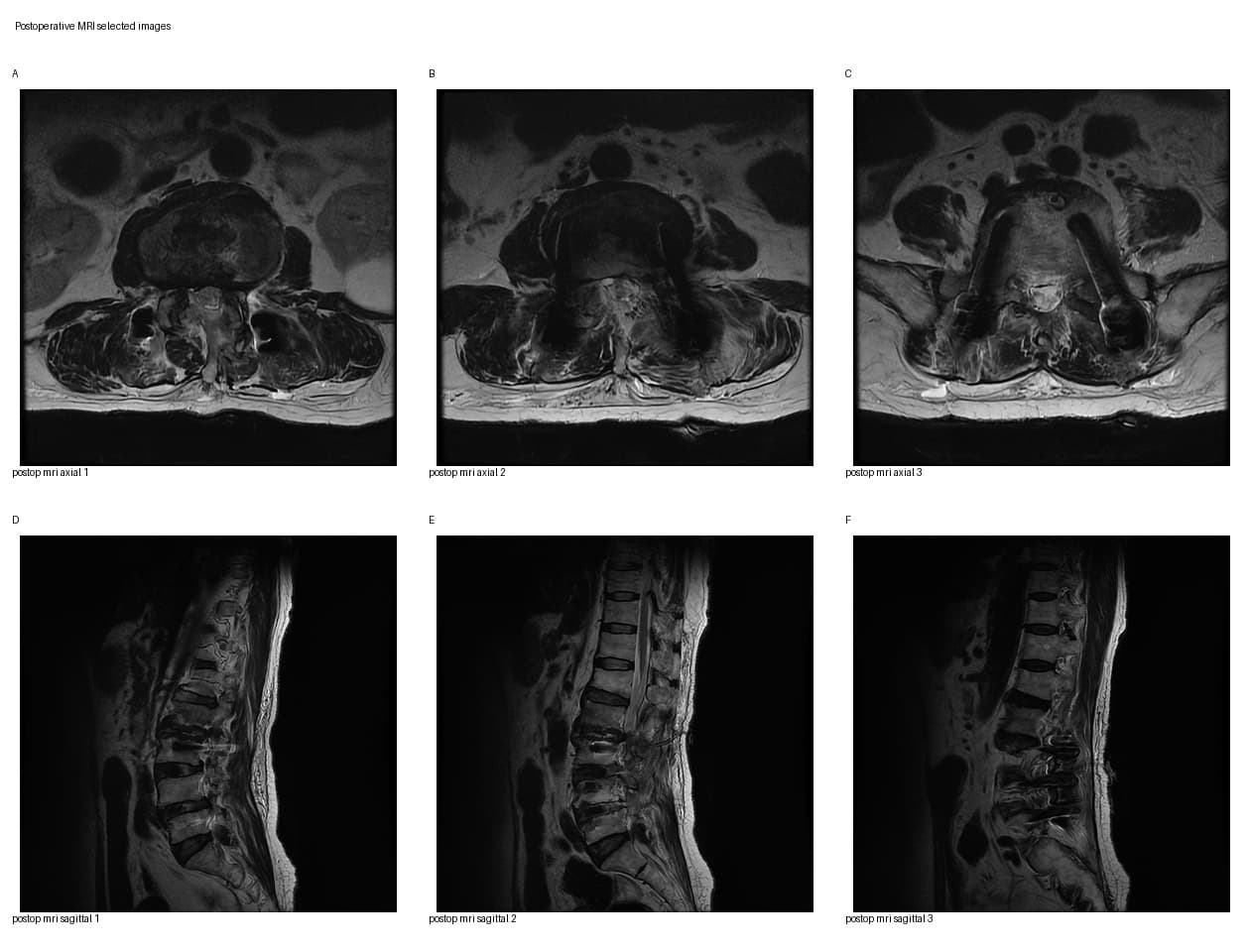
Postoperative imaging
Not reported in the available educational summary.
Educational point
This case illustrates four teaching points. First, lumbosacral transitional anatomy with lumbarization of the sacral segment produces a sixth lumbar-type vertebra (L6) and requires systematic whole-spine level counting and segmental radiographic confirmation before surgical planning; correct level designation is a prerequisite for accurate operative targeting. Second, L3-4 was treated with UBE-ULBD (Unilateral Biportal Endoscopic Unilateral Laminotomy for Bilateral Decompression), which achieves bilateral canal decompression through a unilateral endoscopic corridor without requiring interbody fusion at that level. Third, L4-5 and L5-6 were treated with Biportal Endoscopic TLIF (Biportal Endoscopic Transforaminal Lumbar Interbody Fusion) because those levels required decompression combined with interbody stabilization; this is a fully endoscopic biportal fusion approach performed through a biportal endoscopic approach with endoscopic visualization, decompression, interbody preparation, and stabilization. Fourth, for a patient with blood transfusion limitations, blood-loss-conscious preoperative planning and a fully endoscopic biportal operative strategy are relevant technical considerations; this is a case-specific planning observation and should not be interpreted as a general claim about all patients or all indications.
Published images and video
Media are identified by their public source. Journal figures open at the original source; operative video illustrates a technical example. Imaging and operative appearances do not measure pain relief, function, or durable fusion.
Clinical history
preoperative imaging
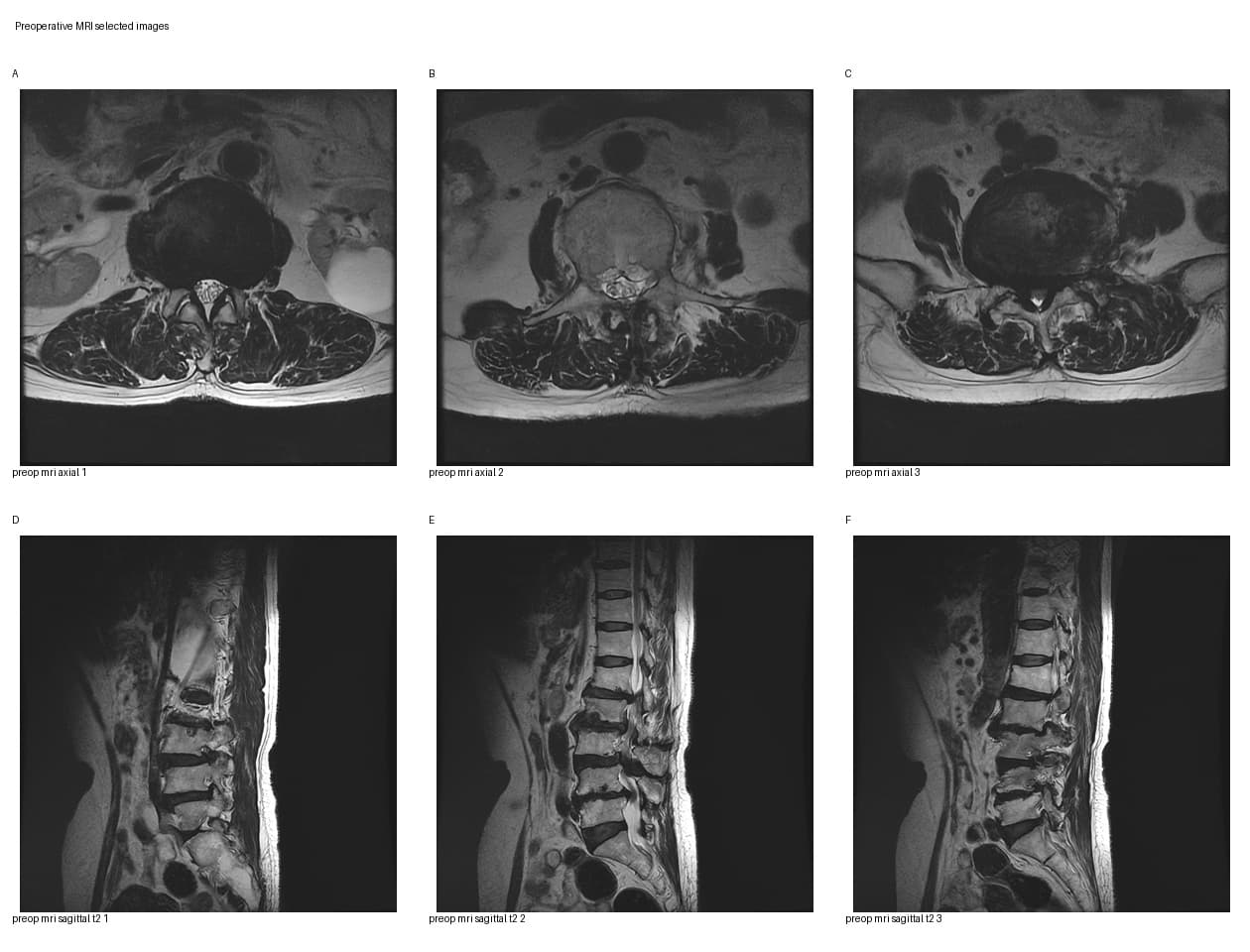
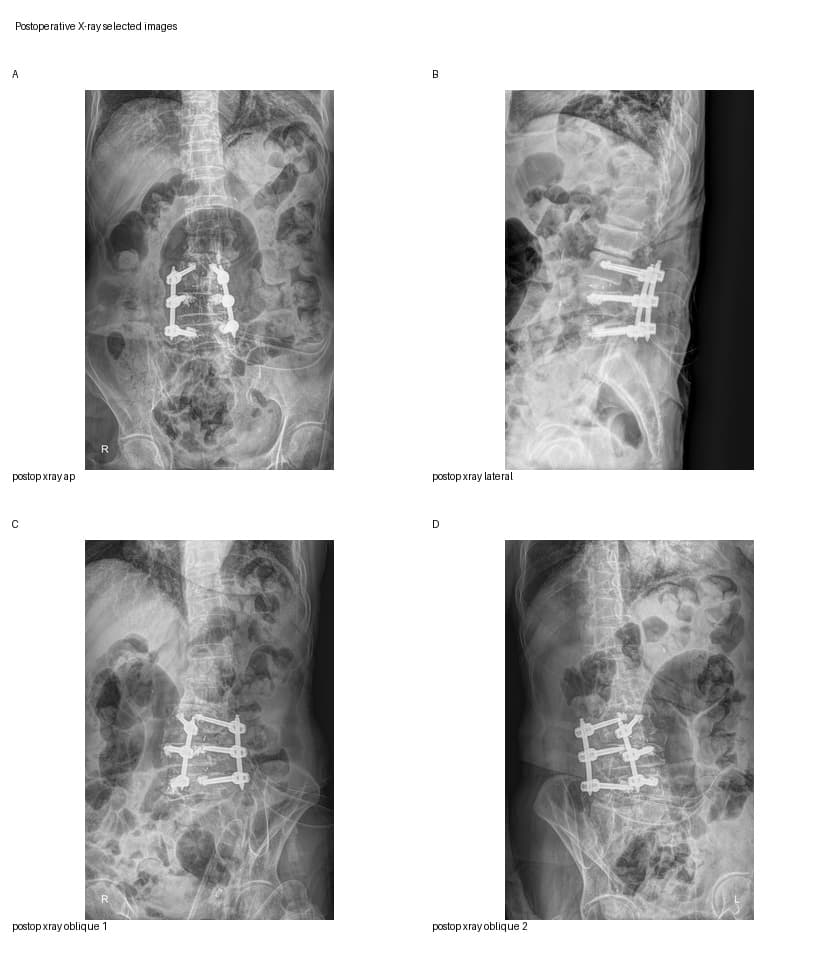
postoperative imaging
Reported observations and missing data
Values below are limited to what the identified public source reports; source charts were not re-audited for this website update. Operative-time definitions and observation windows may differ. Do not compare these values across surgeons or procedures.
- Operative time
- Not reported in the available educational summary.
- Estimated blood loss
- Not reported in the available educational summary.
- Hospital stay
- Not reported in the available educational summary.
- Complications
- Not reported in the available educational summary.
- Follow-up interval
- Not reported in the available educational summary.
- Validated patient-reported outcome scores
- Not reported in the available educational summary.
Evidence and further reading
These sources provide clinical context. They are separate from the source records for this case and do not verify its outcome.
External evidence · randomized trial
Decompression alone or with fusion for degenerative lumbar spondylolisthesis (Nordsten-DS): five year follow-upKgomotso EL et al. BMJ. 2024;386:e079771.
At five years, decompression alone was non-inferior to decompression with instrumented fusion in the trial population.
Applicability: Patient selection and exclusions matter. These findings do not establish that every slip needs fusion, nor compare UBE-TLIF with all alternative techniques.
Source, authorship, and limitations
Source material: Hanjin Jang, MD academic case collection. Case 06 in the previously published Case-Based Education collection by Hanjin Jang, MD. A separate case-level clinical review date and public consent record are not reported in the available source. This entry was organized on 2026-09-11; this date records a website update, not a new clinical review.
Selection is educational. No population denominator, consecutive recruitment process, comparative group, or complete follow-up dataset is supplied. A missing complication field does not mean that no complication occurred. Published observations do not predict another patient's outcome.
No new private patient files were added in this update. Corrections and future clinical additions follow the editorial policy.
Suggested citation: Hanjin Jang, MD academic case collection. Multilevel Stenosis With L6 Lumbarization — UBE-ULBD and Biportal Endoscopic TLIF. Casebank, Case 06. Updated 2026-09-11. https://www.hanjinjangspine1.com/casebank/l6-lumbarization-multilevel-decompression-fusion